Anchored within the Accelerator Fellowship Programme at the Institute for Ethics in AI, University of Oxford
Who gets a say in where AI goes?
Our mission is to hold AI companies accountable by empowering worker voice and bringing democratic input into how AI is developed and deployed.
Vision
AI that strengthens democracy rather than concentrating power: its rules public, contestable, accountable and independently checked.
What we do
We check the rules AI companies write for their models, and we help give the people who build AI and the people whose lives it shapes a voice over them.
Why this matters
The rules for AI are written by a few, for everyone
Frontier AI companies now set out, in writing, how their models should behave and what they must never do. Anthropic calls this document a Constitution; OpenAI calls its document a Model Spec; Microsoft a Code of Conduct. These documents decide what AI will and won't do for everyone who uses it. As such, these principles governing AI behaviour should be taken seriously. Still, many companies publish none; when they exist, these statements are written with little external input, and there are no independent checks to ensure the models are actually following the rules.
Meanwhile, the people with the most at stake have the least say: the public, the workers who build these models, and the workers and users who live under them. One idea runs through all our work: the people governed by these rules should have a decisive voice in shaping them, and genuine standing requires verification.
There is no hope that Artificial Intelligence will actually work for the good of humanity if it does not become Democratic Intelligence. We are here to help provide the tools and ideas to make that transition possible.
Projects
Our current projects
The Model Governance Observatory
A new initiative with the Collective Intelligence Project and UT Austin to review the rules AI companies write for their models, how those rules are made, and whether models follow them.
Worker voice
Giving the people who build AI, and the workers whose jobs it reshapes, a voice that doesn't depend on leaving, starting with a parliamentary conference at Westminster on 20 November.
AI governance in industry
Research with Harvard Business School and Harvard Kennedy School: interviews with the people who govern AI inside leading companies, on how it works in practice and what say employees have in it.
Governance
Team

Co-founder. Executive Director. Governance & Operations.
Spent five years co-founding and running Wequity, a B2B AI company. Oxford PPE; MSc Economics UCLouvain, with a thesis on firm democratisation.

Co-founder. Executive Director. Research & Tooling.
CTO of Wequity for four years, and previously an AI researcher at Hexo Labs. MSc Aeronautical Engineering, UCLouvain and Keio.

Isabelle Ferreras
Co-founder. Academic direction.
Research Director FNRS-UCLouvain, Senior research associate of the Center for Labor and a Just Economy at Harvard Law School and Distinguished research fellow of the Institute for Ethics in AI at the University of Oxford.
In 2025-2026, she chaired the International High-Level Expert Committee on Democracy at Work, set up by the Spanish Government. She was nominated an Accelerator Fellow of the Accelerator Fellowship Programme 2026-27 of the Institute for Ethics in AI at the University of Oxford.
Being formed
Steering committee
Chaired by Isabelle Ferreras, a steering committee of senior scholars and practitioners in labour law, democratic theory, AI ethics and industry advises Democratic Intelligence on its strategy and holds it to its mission. Its first members are below; we will announce more here as they are confirmed.

Professor of Law and Associate Dean (Research), Faculty of Law, University of Oxford
Read bio of Jeremias Adams-PrasslHide bio of Jeremias Adams-Prassl
Jeremias Adams-Prassl is Professor of Law and Associate Dean (Research) at the Faculty of Law, University of Oxford, a Fellow of Magdalen College and a Senior Research Associate of the Institute for Ethics in AI. He leads the ERC-funded iManage project on algorithmic management, whose policy blueprint is Regulating AI at Work, and served on the Spanish expert committee on democracy at work. His work on technology and the future of work has been drawn on by governments and international organisations and includes Humans as a Service (Oxford, 2018).
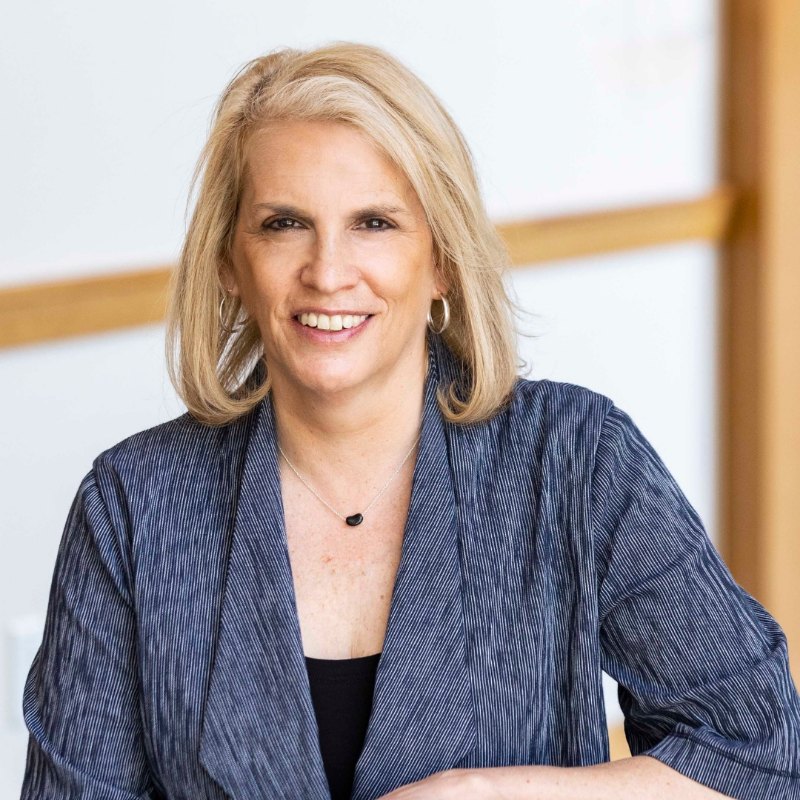
Professor of Practice and Executive Director, Center for Labor and a Just Economy, Harvard Law School
Read bio of Sharon BlockHide bio of Sharon Block
Sharon Block is Professor of Practice and Executive Director of the Center for Labor and a Just Economy at Harvard Law School, where she launched the Clean Slate for Worker Power project. She has held senior labour policy roles across the US government over two decades, including as a member of the National Labor Relations Board, senior counselor to the Secretary of Labor, senior counsel to the Senate HELP Committee under Senator Edward Kennedy, and acting head of the Office of Information and Regulatory Affairs in the Biden White House. She led the White House Summit on Worker Voice in 2015.

Caroline Emmer De Albuquerque Green
Director of Research and Head of Public Engagement, Institute for Ethics in AI, University of Oxford
Read bio of Caroline Emmer De Albuquerque GreenHide bio of Caroline Emmer De Albuquerque Green
Caroline Emmer De Albuquerque Green is Director of Research and Head of Public Engagement at the Institute for Ethics in AI, University of Oxford, and leads the Institute’s Accelerator Fellowship Programme. Her research focuses on AI and human rights, in particular in health and social care, and on how organisations engage stakeholders to assess and manage the risks of AI. She holds a PhD in Gerontology from King’s College London, an MSc in Human Rights from the LSE and an LLB from the University of Edinburgh.

Damon Wells ’58 Professor of Political Science, Yale University
Read bio of Hélène LandemoreHide bio of Hélène Landemore
Hélène Landemore is the Damon Wells ’58 Professor of Political Science at Yale University, with a secondary appointment in Philosophy. Her research and teaching cover democratic theory, political epistemology, and the ethics and politics of artificial intelligence. She is a fellow of the Institute for Ethics in AI at the University of Oxford and served on the Governance Committee of the most recent French Citizens’ Convention. Her books include Democratic Reason (Princeton, 2013), Open Democracy (Princeton, 2020) and, most recently, Politics Without Politicians: The Case for Citizen Rule.
Democratic Intelligence works from London and Brussels, in collaboration with the Institute for Ethics in AI at the University of Oxford. We are recruiting a senior technical AI safety evaluations researcher, potentially at co-founder level for the right person. Write to us.
Our academic home
Institute for Ethics in AI, University of Oxford


Democratic Intelligence is anchored within the Accelerator Fellowship Programme at the Institute for Ethics in AI, University of Oxford, where Isabelle Ferreras is a 2026-27 Accelerator Fellow.
Supported by


Take part
Where you come in
You work at an AI company
Tell us what your company's alignment documents get right or wrong, or how easy it is to raise a concern where you work. Gabriel or Sam reads every message, in absolute confidentiality: nothing you share is passed on or published without your agreement.
Prefer Signal? We are at gab.944.
You research law, AI, ethics or policy
Join one of the Observatory's four committees. Members review the Index's method and scores, about four hours a month in the first three months, then about eight hours a quarter. The call goes out in November; applications close on 31 December.
We'll email you the call the day it opens.
You work in policy or government
Join us at the Palace of Westminster on 20 November, or ask us for a briefing on what AI companies' alignment documents say and how they are governed and regulated.
You fund AI governance
We would be glad to walk you through what we have built so far and our plans for 2027. We receive no funding from AI companies.
You have a question, an idea or a pitch
Whoever you are, write to us. Gabriel or Sam reads every message and answers.
Stay updated
One email a month, at most
The Index going public, the Observatory's call and digests, what comes out of Westminster, and the events that follow.
We use your address only to send these updates. Unsubscribe any time by replying to any email.